
UK Recruitment Market Report 2026
UK Recruitment Market Report 2026
Hiring processes • interviews • counteroffers • retention • employee tenure
A practical, evidence-led briefing for recruitment leaders, agency owners and hiring managers.
Prepared by Jamie Rafferty
Managing Director, The Job Office Ltd
43 years in recruitment | Specialist Rec2Rec
Published October 2026
Data cut-off: 13 October 2026
Executive Summary
What the numbers say, and what employers should do next
The market in one sentence Hiring conditions remain cautious and selective, but recruitment activity is not uniform: flexible staffing remains economically significant, while specialist skills and strong recruiters continue to command attention.
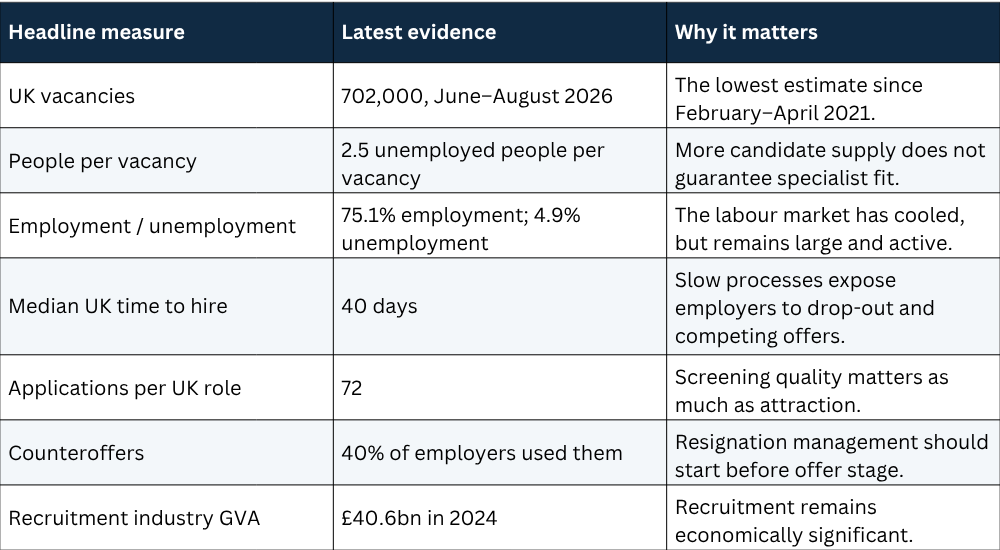
Five practical conclusions
- Set a clear decision timetable before advertising or briefing agencies.
- Keep interview stages proportionate to the role and communicate deadlines to candidates.
- Discuss motivations, resignation risk and likely counteroffers throughout the process, not only after offer.
- Track candidate conversion at each stage instead of focusing only on applications.
- Measure 12-month retention and quality of hire, not simply placement volume.
-
UK Labour Market
A cooler market, with continued hiring and uneven sector demand
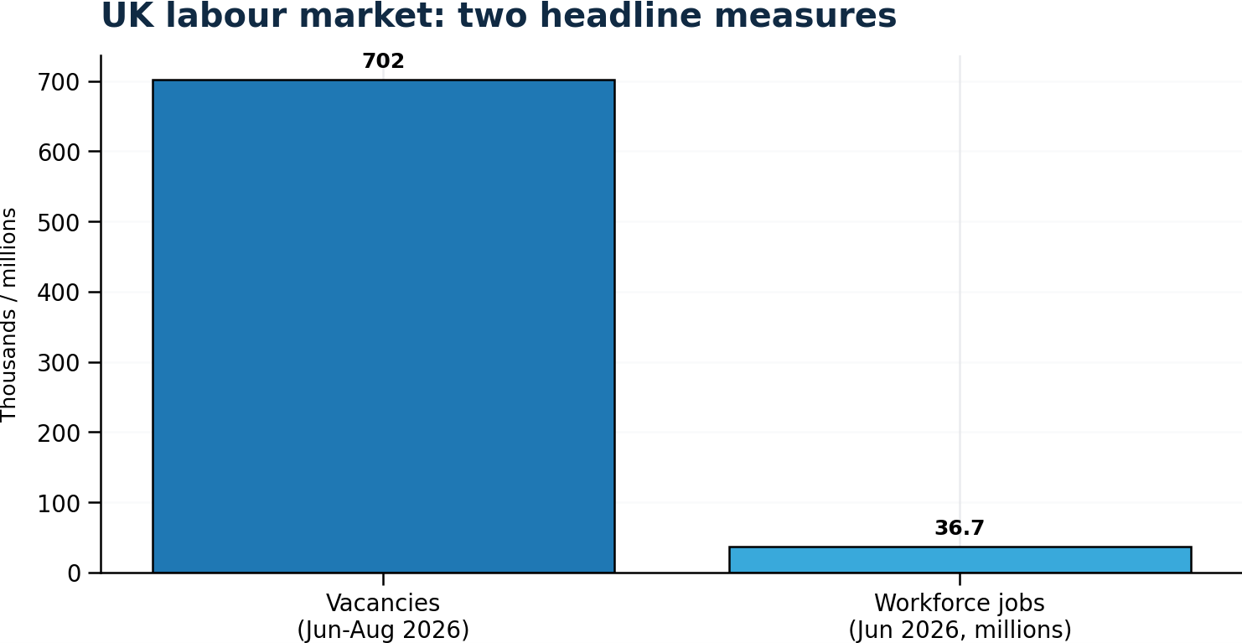
Source: ONS, September 2026 labour market and vacancies releases.
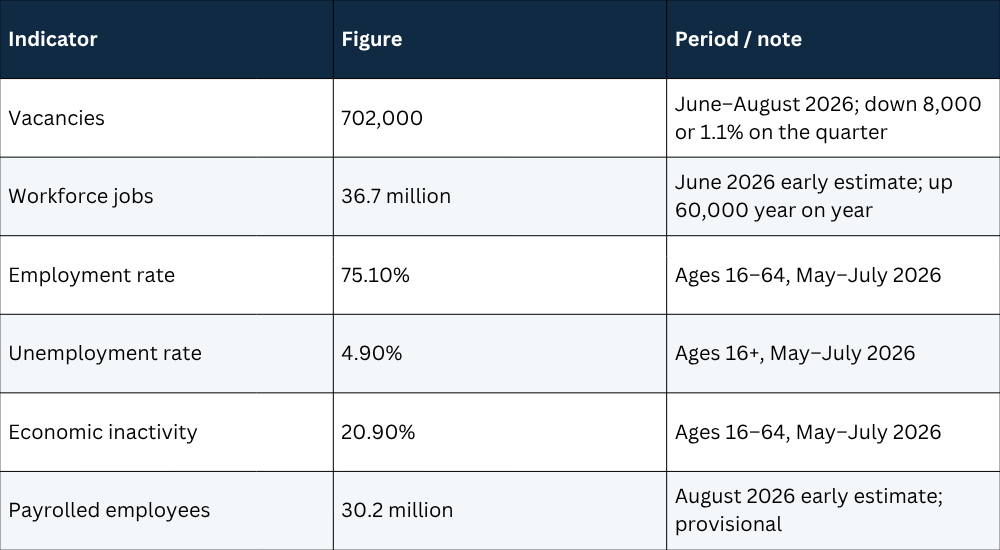
Jamie’s market view More CVs do not automatically mean more talent. Employers may receive greater response volumes while still struggling to secure people with proven, niche or revenue-generating experience.
-
The UK Recruitment Industry
Scale, flexibility and the economic value of staffing
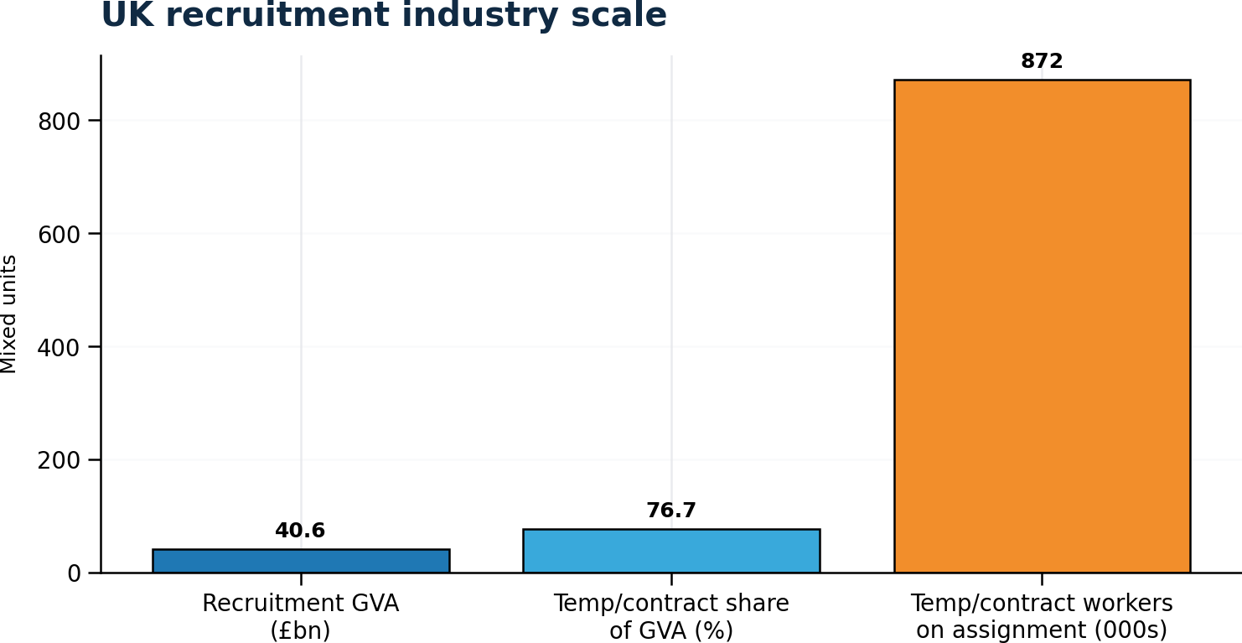
Source: REC Recruitment Industry Status Report 2024/25.
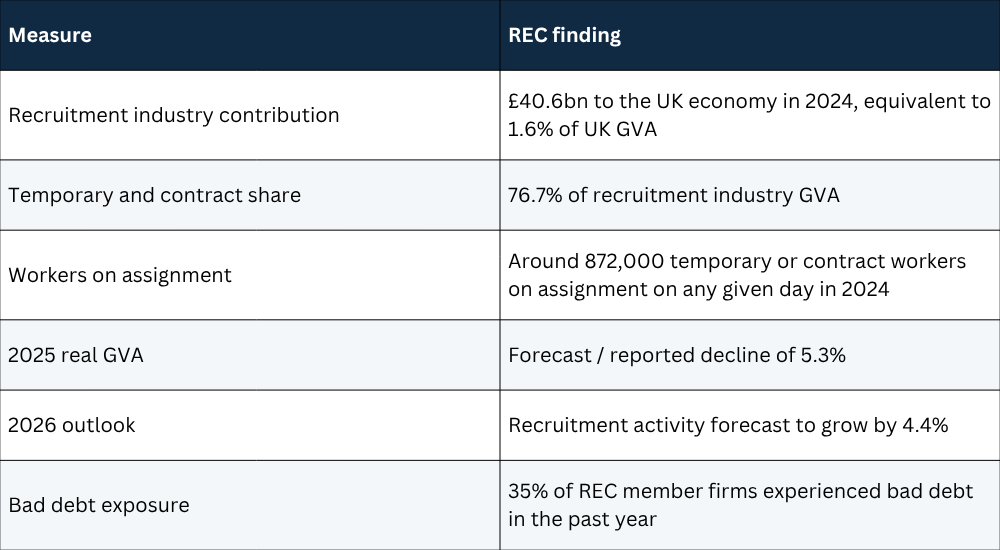
Commercial implication for recruitment businesses
- Flexible staffing remains central to the sector’s economic contribution.
- Cashflow discipline, credit control and client quality remain material commercial issues.
- A recovering market does not remove the need for sector specialisation and rigorous qualification.
-
Hiring Process Benchmarks
What 8.9 million UK applications reveal
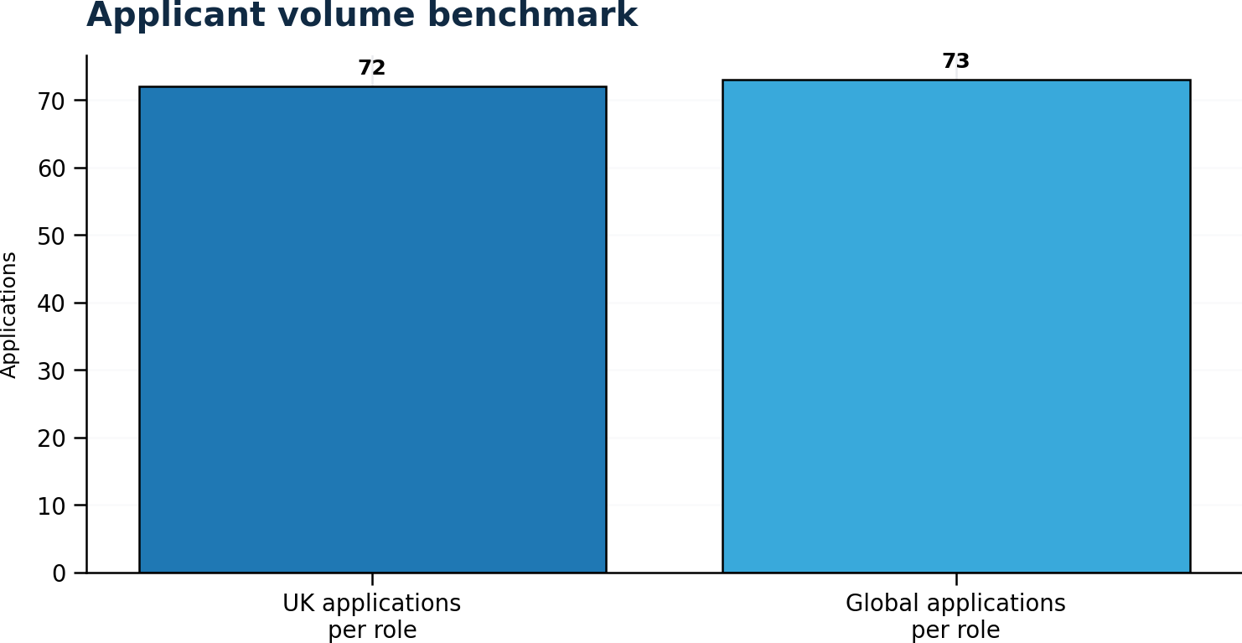
Source: SmartRecruiters UK benchmark, published March 2025.
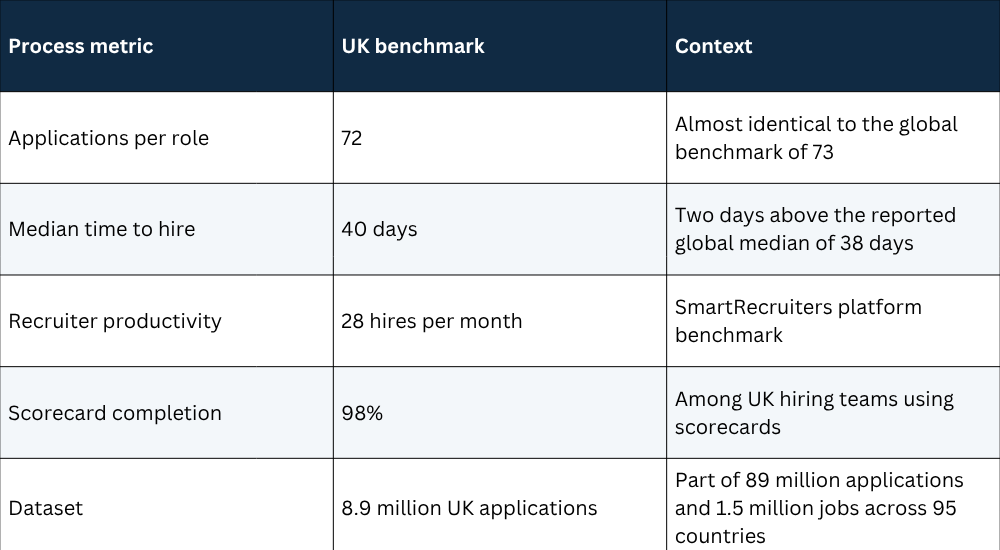
Do not confuse volume with choice A large applicant pool can increase administration without improving the shortlist. Define the evidence required for the role, screen consistently and move credible candidates quickly.
-
Interviews and Selection
A practical process built around evidence and pace
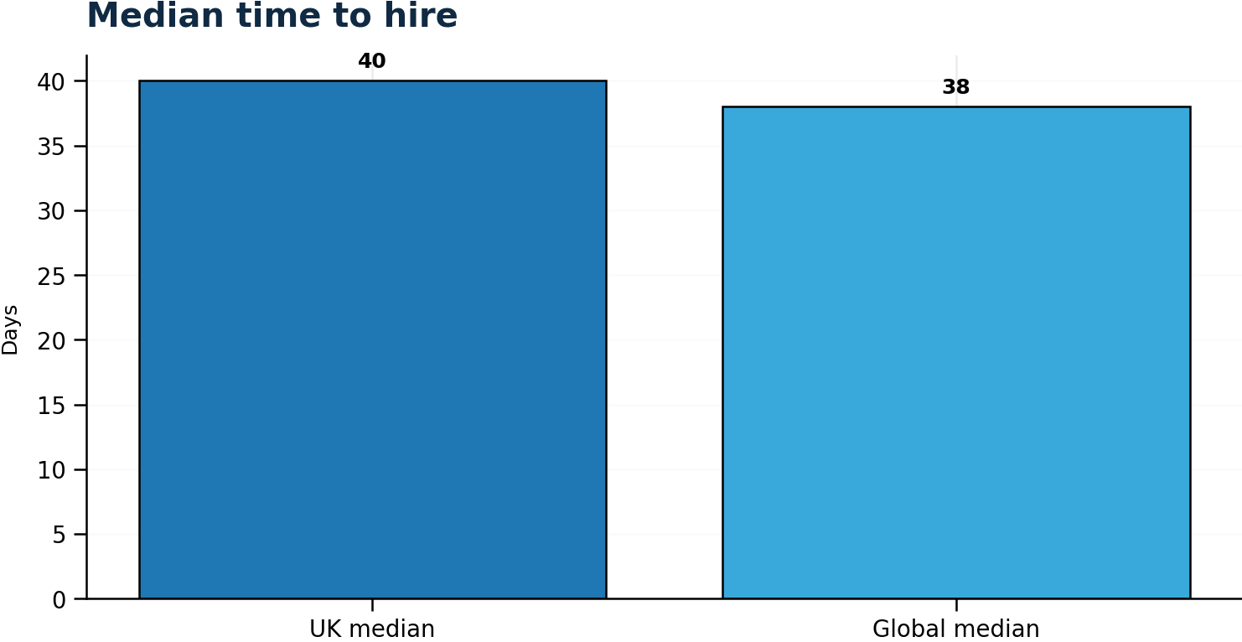
Source: SmartRecruiters 2025 benchmark report.
A proportionate interview model
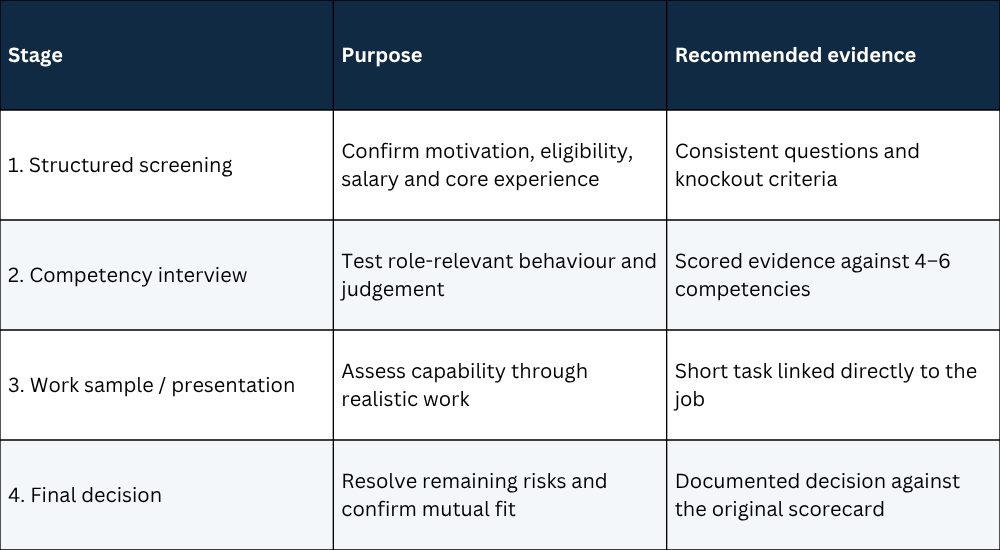
Where processes fail
- Too many stages for the seniority or complexity of the role.
- Repeated questions without new evidence being collected.
- Unclear ownership of the final decision.
- Long gaps between interviews and feedback.
- Changing the brief after candidates have entered the process.
Benchmark, not a target The 40-day UK median describes observed hiring activity. Employers should define their own clock, role type and decision stages before comparing performance.
-
Offers and Candidate Conversion
The final stage should not contain new surprises
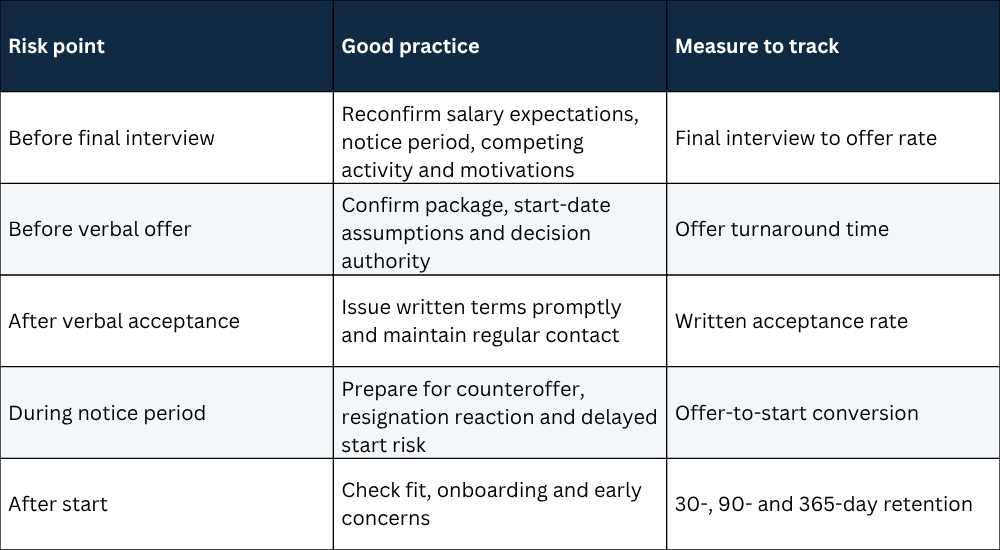
Straight-talking advice Counteroffer risk is rarely created on resignation day. It is usually visible earlier through unclear motivations, unresolved salary concerns or weak candidate commitment.
A simple conversion dashboard
- Applications → screened candidates
- Screened candidates → interviews
- Interviews → offers
- Offers → acceptances
- Acceptances → starts
- Starts → retained at 12 months
-
Counteroffers
Widespread, often reactive and frequently unmanaged
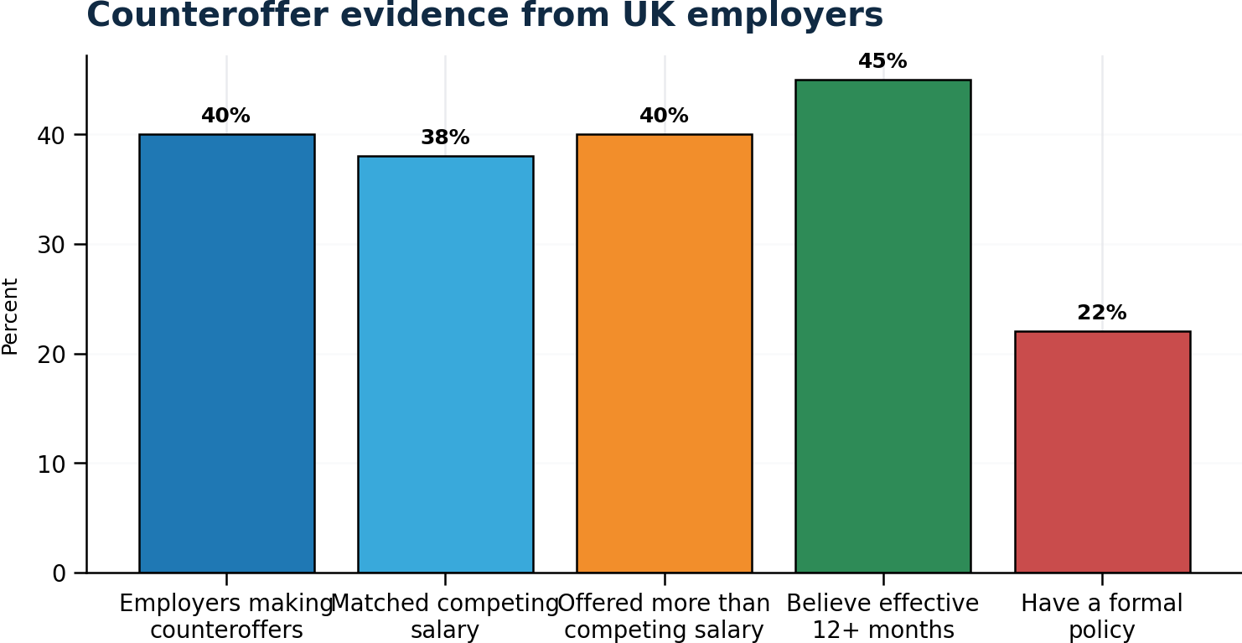
Source: CIPD Labour Market Outlook survey of 2,000 UK employers, August 2023.
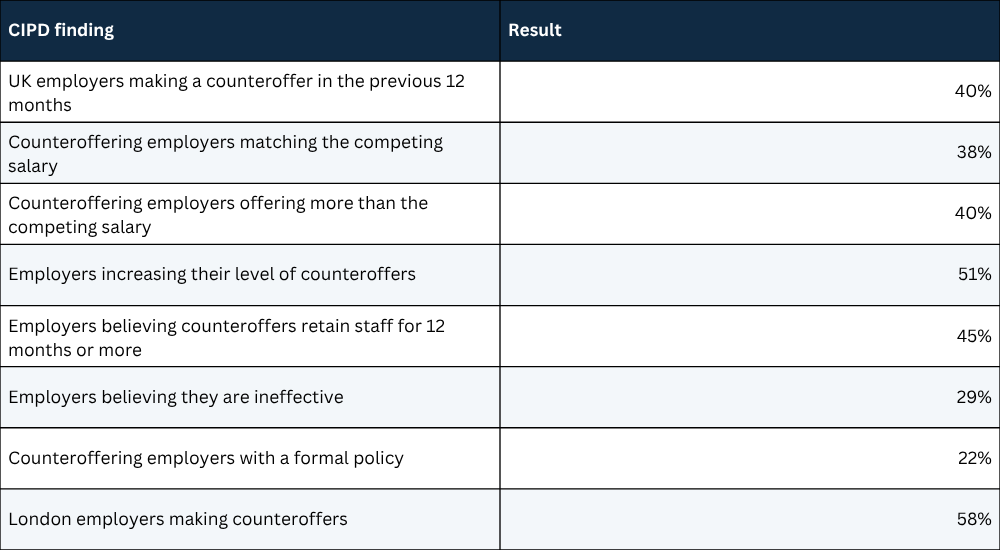
Implication
A counteroffer conversation should address workload, autonomy, leadership, progression, flexibility and reward. A salary-only response may not resolve the original reason for leaving.
-
Length of Service, Turnover and Retention
Tenure and turnover answer different questions
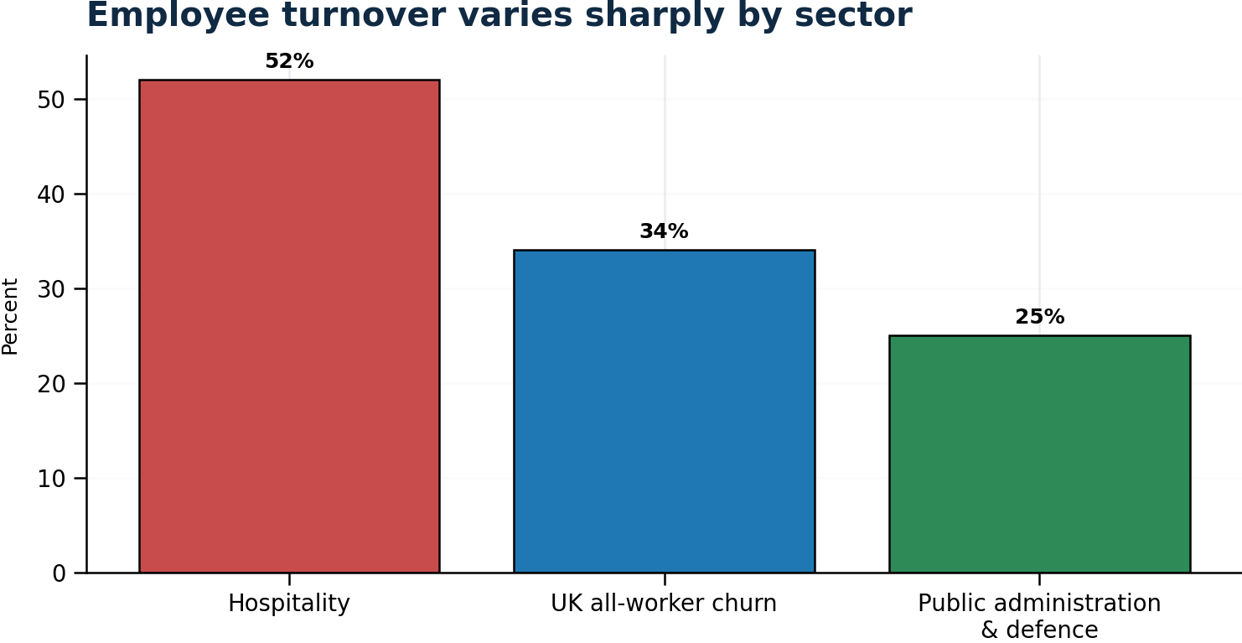
Source: CIPD analysis of ONS Annual Population Survey data, January 2022–December 2023.
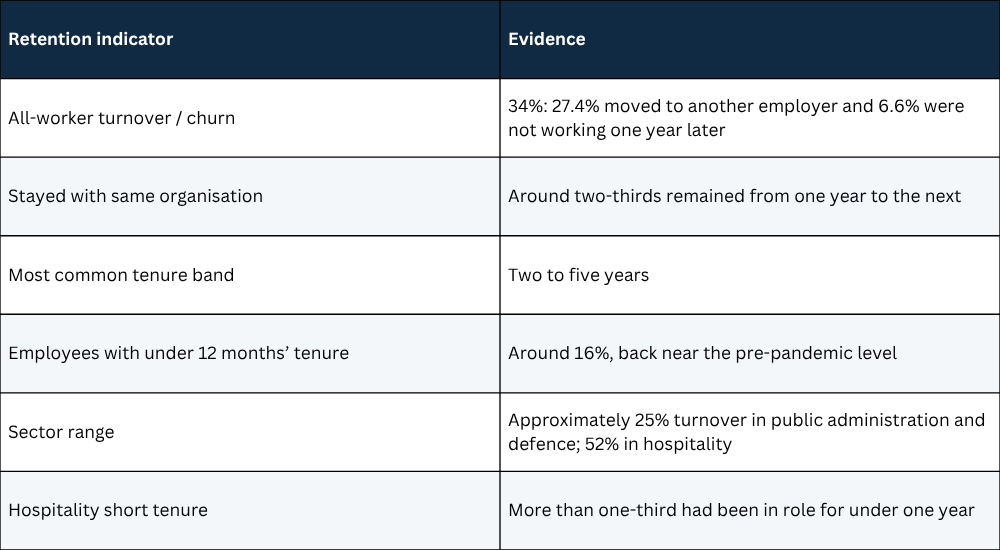
Important limitation The available national evidence describes tenure bands and turnover, not a single reliable “average length of service” for every UK employee. Sector, age and occupation materially affect the result.
-
Employer Hiring Scorecard
A practical benchmark for improving hiring outcomes
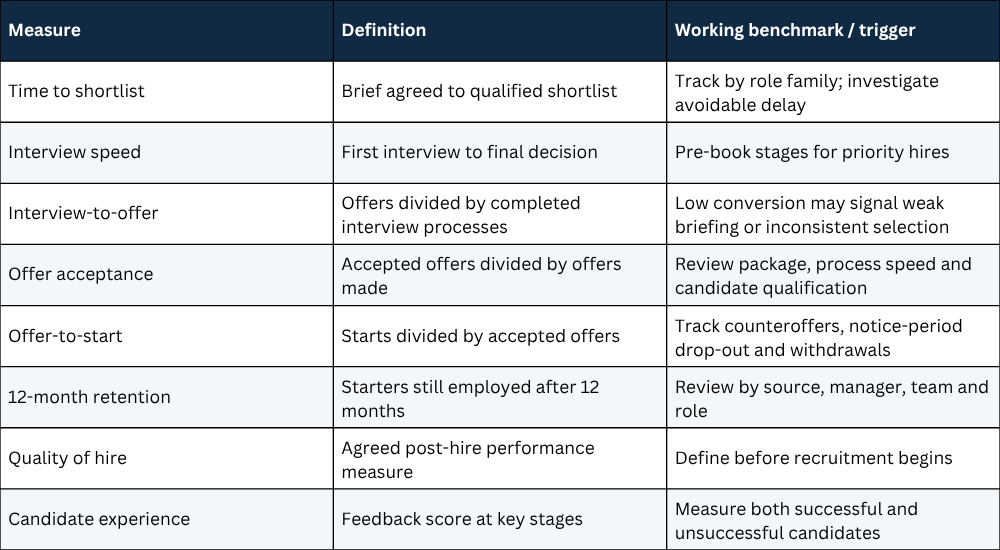
Recommended governance
- One named owner for each vacancy.
- A written scorecard agreed before sourcing begins.
- A maximum number of stages agreed in advance.
- Feedback deadlines understood by every interviewer.
- Monthly review of conversion, speed and retention data.
-
Recommendations for Recruitment Leaders
Six actions that turn market data into better hiring
- Tighten the brief Separate essential evidence from preference. A vague brief creates volume, not quality.
- Design the process before launch Agree interviewers, stages, scorecard, salary authority and decision dates before approaching candidates.
- Qualify motivations repeatedly Revisit reasons for moving, competing processes and counteroffer risk at every meaningful stage.
- Reduce dead time Schedule next steps quickly and avoid long gaps that provide space for competitors and counteroffers.
- Sell the reality Give candidates a credible picture of leadership, progression, culture, expectations and earning potential.
- Measure retention A hire that starts but leaves quickly is not a successful outcome. Track 30, 90 and 365 days.
The Job Office perspective
The best recruitment partnerships combine market reach with honest advice. Sometimes that means challenging the salary, simplifying the interview process, questioning a weak brief or advising a candidate not to move.
Methodology, Definitions and Sources
How to use this report responsibly
Methodology
This report combines official UK labour-market statistics, professional-body research and large-platform recruiting benchmarks available by 13 October 2026. Figures use the period and definition stated by the original publisher. Different datasets should not be treated as directly interchangeable.
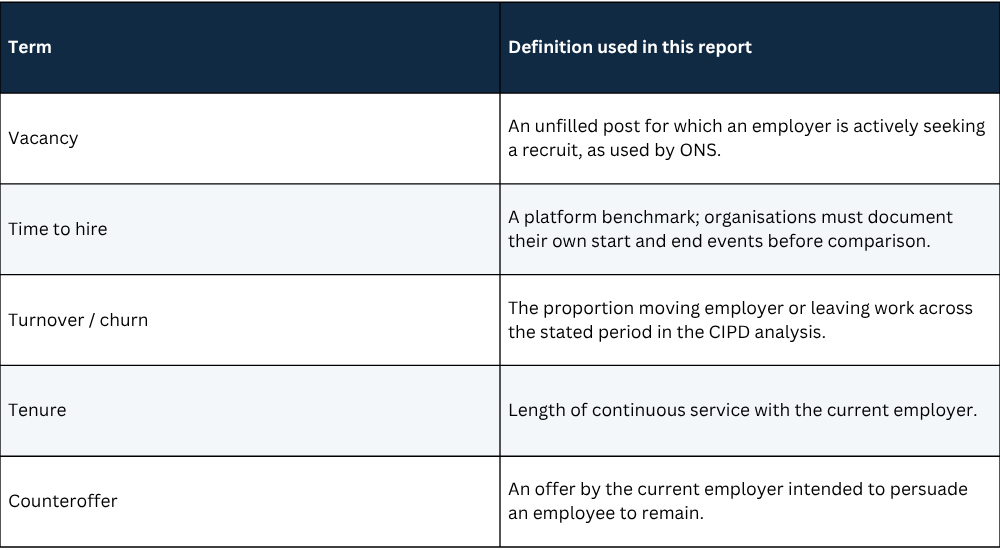
Principal sources
- Office for National Statistics: Vacancies and jobs in the UK: September 2026 https://www.ons.gov.uk/employmentandlabourmarket/peopleinwork/employmentandemployeetypes/bulletins/jobsandvacanciesintheuk/latest
- Office for National Statistics: Employment in the UK: September 2026 https://www.ons.gov.uk/employmentandlabourmarket/peopleinwork/employmentandemployeetypes/bulletins/employmentintheuk/latest
- Recruitment & Employment Confederation: Recruitment Industry Status Report 2024/25 https://www.rec.uk.com/our-view/research/recruitment-and-industry-status-report/uk-recruitment-industry-status-report-202425
- SmartRecruiters: United Kingdom Benchmark Recruiting Metrics 2025 https://www.smartrecruiters.com/resources/article/united-kingdom-benchmark-recruiting-metrics/
- CIPD: Employers turn to counteroffers to keep key staff https://www.cipd.org/uk/about/press-releases/employers-turn-to-counteroffers-summer-lmo/
- CIPD: Benchmarking employee turnover and tenure https://www.cipd.org/uk/views-and-insights/thought-leadership/cipd-voice/benchmarking-employee-turnover/
About The Job Office Ltd
The Job Office is a specialist UK Rec2Rec business supporting recruitment agencies hiring recruiters and recruitment professionals considering their next career move. The approach is confidential, personal and straight-talking.
Start a confidential conversation
www.thejoboffice.com | Jamie Rafferty, Managing Director
Tel: 07969 620324 | Email: jamie@thejoboffice.com
Please note that for your privacy no data from this form is stored in this website, beyond the legitimate interest period. View our privacy policy
